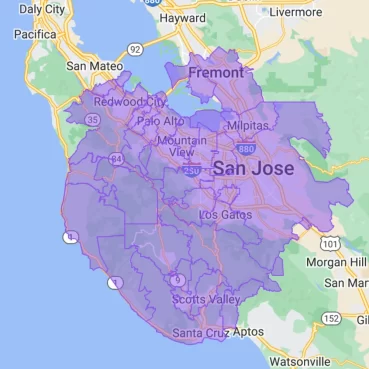
In the Silicon Valley real estate market, homeowners often make a critical mistake: they treat security as a hardware purchase rather than an engineering challenge.
When you decide to secure a high-value property in Palo Alto or a commercial space in San Jose, you are faced with two choices: hire a traditional installer or partner with a Security Architect. While the names might sound similar, the outcomes are worlds apart.
Here is why an architectural approach is the only way to ensure total protection for your assets and privacy.
1. Design vs. Labor: The "Where do I drill?" Problem
A traditional installer is focused on labor efficiency. When they walk into your property, their primary question is: "Where is the easiest place to run this cable?" This often leads to cameras placed in suboptimal positions, creating blind spots that professional intruders know how to exploit.
A Security Architect starts with a blank slate and a property audit. We analyze:
-
Optical Coverage: Calculating precise focal lengths to ensure facial recognition at entry points.
-
Lighting Dynamics: Assessing how glare or low-light conditions in the Bay Area fog will affect sensor performance.
-
Perimeter Strategy: Designing overlapping fields of view so that no device can be tampered with without being recorded by another.
2. Vendor Agnosticism: Consulting vs. Selling
Most installation companies are dealers for specific brands. They have quotas to fill and inventory to move. If they have 50 cameras of a certain brand in their warehouse, that is exactly what they will recommend for your home—whether it’s the best fit or not.
As architects, Guardyx is vendor-agnostic. We don’t carry inventory. Our loyalty is to the project, not a manufacturer. We select the best-in-class hardware for your specific needs:
-
Enterprise Wi-Fi from Ubiquiti.
-
Optics and Analytics from Axis or Hanwha.
-
Smart Access from Openpath or Salto. You get a custom-curated ecosystem, not a "one-size-fits-all" box.
3. Data Privacy and Cybersecurity
In the tech capital of the world, your greatest vulnerability isn't just a broken window—it’s a breached network. Many installers lack the IT background to properly secure the devices they hang on your walls.
A Security Architect treats your surveillance system as a hardened IT network. We implement:
-
VLAN Segmentation: Keeping your security traffic separate from your home Wi-Fi.
-
End-to-End Encryption: Ensuring your footage cannot be intercepted.
-
Local Storage Optimization: Prioritizing secure, on-site recording over vulnerable third-party clouds.
4. The "Managed Expert" Advantage
A traditional company sends whoever is on the clock that day. At Guardyx, our model is built on curated expertise.
Because we operate as a managed platform, we match your specific project with the specialized talent it requires. If your estate requires complex underground trenching and fiber optics, we deploy a team specializing in high-end infrastructure. If you need a discreet TSCM (bug sweeping) sweep, we bring in a privacy expert. You get the right hands for the right job, all overseen by our lead engineers.
Conclusion: Investing in Intelligence
An installer provides a service; a Security Architect provides a Blueprint.
Choosing the architectural path means you aren't just buying cameras—you are investing in a system designed to evolve, protect your privacy, and provide actual peace of mind. In the Bay Area, where the stakes are high, "good enough" installation is no longer enough.
Stop guessing with your security. Start engineering it.